
The Deportation Train and Its Human Cargo
The Most Precious of CargoesThis flow follows the train from an object of imagined abundance to an instrument of deportation and, finally, a symbol of rescue and loss.
increasing Bearing strength in each event
 decreasing
Bearing strength in each eventdecreasingThe Train in the Woods
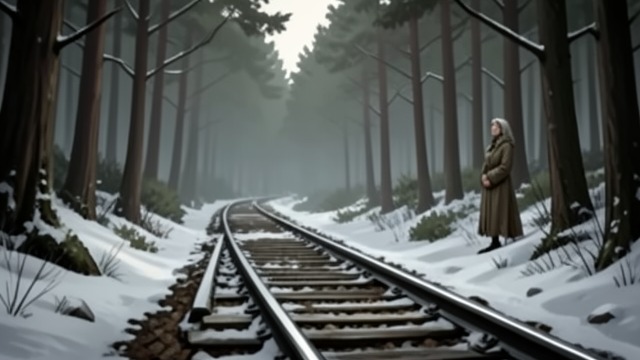
The Train in the Woods
A new line through the forest
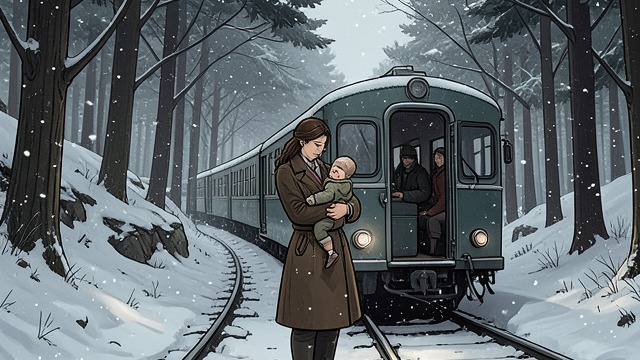
War brings railway tracks through Poor Woodcutter’s Wife’s woodland. A train passes regularly, separating the forest and its inhabitants from the wider world.
Imagined abundance
She knows little of trains and hears the word cargo as a promise of useful goods. Her hopeful interpretation clashes with the true purpose of the wagons, whose barred windows conceal people being deported.
The Deportees’ Journey
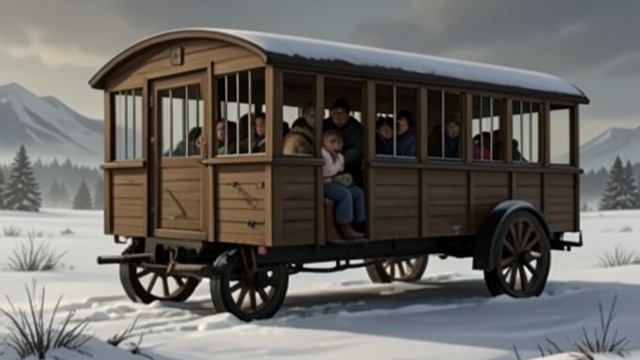
The Deportees’ Journey
From internment to transport
Zacharie Grumberg and his family are moved from Pithiviers to Drancy internment camp, then placed aboard a cattle wagon. Their earlier luck at remaining together offers no assurance of what awaits them.
A journey without refuge
The cramped wagon holds children, the old, and the sick. Stories of the Iași pogrom make the passengers fear that the train may be moving not toward work but toward death.
A Hand at the Window
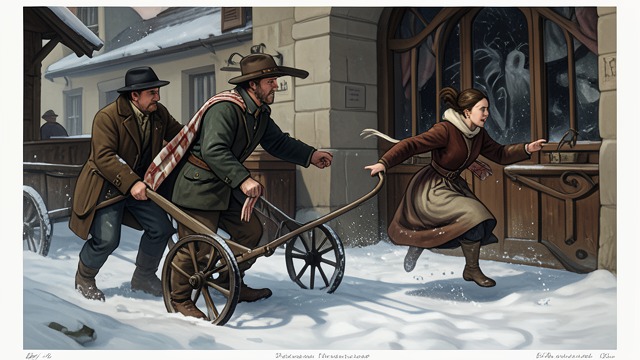
A Hand at the Window
The act of release
Zacharie Grumberg pushes one twin through the wagon bars in a Prayer shawl. From inside the train, he sees Poor Woodcutter’s Wife running in the snow and gestures for her to take the bundle.
Rescue entangled with loss
The train carries on, leaving the infant with a stranger and the father with the child he could not save. The gesture may give one child a future, but it does not stop the deportation or spare the family its losses.
The Arrival at the Camp
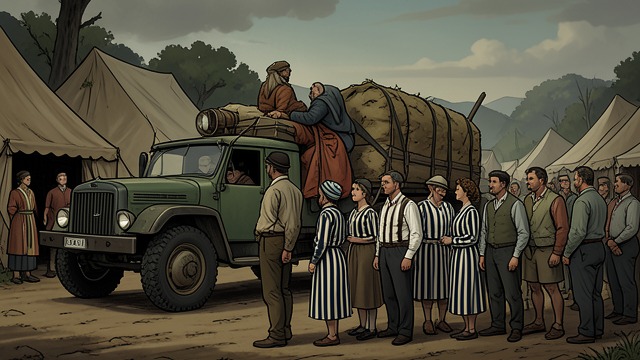
The Arrival at the Camp
A destination of death
Convoy 49 reaches its destination in Poland. Deportees face a selection process that keeps a small proportion for labor and sends the rest to be murdered.
A family divided
Dinah and Henri do not survive the selection. The official accounting of transport and selection strips personal lives into categories, while the novel restores the names and relationships that the system sought to erase.
The Empty Return
The Empty Return
An unseen passage
The train heads back through the forest after unloading its passengers. Poor Woodcutter’s Wife is too absorbed in caring for the rescued baby to notice it.
Changed meaning
The empty train is not evidence that its cargo has been delivered safely; it marks the system’s capacity to repeat its work. The woman’s private rescue happens within, not outside, a continent-wide machinery of deportation.
Early in the occupation
February and March 1943
During the snowy passage of Convoy 49
March 6, 1943
After the train departs the camp
